
Money in Vietnam: cash, cards, ATMs and exchange
A practical system for using Vietnamese dong, cards and ATMs, avoiding unwanted conversion, protecting backups and recovering from payment problems.
9 minute read · Updated
How this guide is researched and reviewed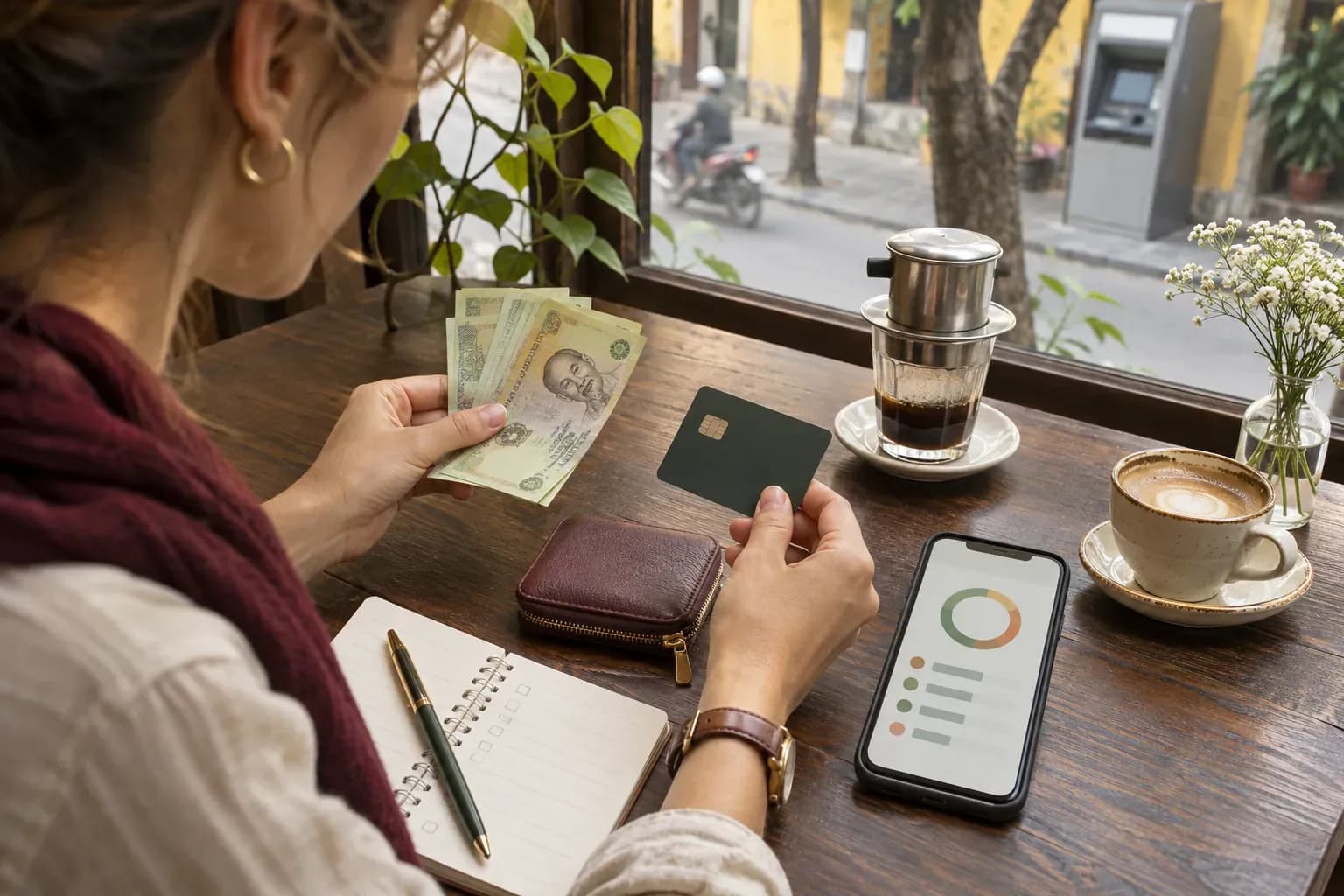
Price and record spending in Vietnamese dong (VND).
Cash remains useful; cards are common at many established businesses.
Read a home-currency conversion offer before accepting or declining it.
Keep a second card and emergency cash away from the daily wallet.
Quick answer
Carry a working mix of Vietnamese dong and two payment cards stored separately. Prefer paying in VND after comparing the disclosed conversion and your issuer's foreign-transaction terms, inspect ATM operator fees before confirming, keep the card in sight and withdraw manageable amounts from controlled locations. Record large-cash declaration rules separately because they are legal requirements, not budgeting advice.
Choose the payment method by situation
Acceptance and fees vary. Keep another usable method after every transaction.
| Situation | Useful method | Check | Backup |
|---|---|---|---|
| Hotel or established restaurant | Card or VND cash | Amount, currency and deposit | A second card or cash |
| Market, street food, small cafe | Small VND notes | Price and change | Reserve kept out of sight |
| ATM withdrawal | Debit card at a controlled ATM | Operator fee, limit and conversion | Different card stored separately |
| Cash exchange | Bank or licensed counter | Rate, count and receipt | Do not exchange the whole reserve |
Issuer fees, ATM limits and exchange rates change. Check the actual screen and your card terms.
In this guide
Build a payment system, not a single preferred method
Vietnam is easiest with a mixture of Vietnamese dong, at least two payment cards and a small emergency reserve stored separately. Cards work well at many hotels, larger restaurants and established businesses, while cash remains useful for markets, street food, small cafés, tips and local transport. Acceptance varies by merchant and location.
Do not make the entire trip depend on one physical card, one phone wallet or one large bundle of cash. A resilient setup can survive a declined transaction, lost wallet, damaged card or temporarily unavailable ATM.
The right payment method is the one that leaves you a working backup after the transaction.
Think and record spending in Vietnamese dong
The Vietnamese dong is the local currency. Learn the difference between common denominations and count change before leaving the counter. Several notes have large numbers and related colours, which makes mistakes easier when tired or in low light.
Keep the working budget in VND and convert only when reviewing totals. Rounding every small purchase into a home currency can hide how quickly a day of rides, drinks and admissions adds up. Use a simple note or budgeting app with the actual VND amount.
Set the trip-level allowance first with the Vietnam travel cost guide, then use this guide to control how the money moves.
Choose the transaction currency deliberately
A card terminal or ATM may offer to convert a VND transaction into the card's billing currency. This is Dynamic Currency Conversion. Visa explains that the screen should disclose both amounts, the exchange rate and any additional fee or markup, and that the cardholder must be able to accept or decline the conversion.
Paying in VND usually leaves conversion to the card network and issuer, but the best result still depends on the issuer's foreign-transaction fee. Compare the full cost rather than choosing a familiar currency because it feels safer. If a merchant selects a conversion without consent, keep the receipt and contact the issuer.
Use ATMs in a controlled sequence
Choose an ATM attached to a bank branch, airport facility or well-used indoor location when practical.
Inspect the card slot and keypad, shield the PIN and keep strangers outside the interaction.
Read the withdrawal amount, operator fee and currency-conversion choice before confirming.
Take the card, cash and receipt before organizing the wallet.
Check the banking notification and lock the card immediately if the amount or status looks wrong.
Withdrawal limits and operator fees differ by machine and change over time. Your home bank may add a separate fee. Fewer considered withdrawals can reduce fixed fees, but carrying a large amount creates a different risk; choose an amount that can be divided and secured.
Exchange cash where the rate and count are visible
Use a bank or licensed exchange counter and ask for the rate before handing over money. Count the VND in view of the cashier and keep the receipt. Avoid exchanging with strangers or accepting damaged notes that may be difficult to spend.
Bring clean, current foreign notes if cash exchange is part of the plan.
Separate the transaction cash from the daily wallet before leaving the counter.
Do not display the whole reserve while paying for a small item.
Recheck live rates when comparing offers; screenshots from an earlier day are not evidence of today's rate.
Pay by card without losing control of the card
Confirm the amount on the terminal and keep the card in sight. Contactless payment reduces handling but does not remove the need to inspect the amount and currency. At hotels, ask whether a deposit or pre-authorization will be released automatically and keep the final receipt.
Use transaction notifications where available. If a small verification charge or unexpected duplicate appears, record the merchant, time and amount before contacting the issuer. Never share a PIN, one-time code or card security code with a person offering to solve a payment problem.
Separate daily money from recovery money
Carry only the day's expected cash and one primary card. Keep a second card and emergency cash in a secure separate location. Store issuer contact numbers and the last four digits of each card somewhere that does not expose the full number or security code.
A phone wallet is convenient, but the phone may also hold maps, bookings and authentication. Protect it with a strong device lock and account recovery method. Keep essential backup codes offline rather than in the same email account that a stolen unlocked phone could access.
Treat large cash movements as a customs question
Travellers carrying significant cash should check current declaration rules before both arrival and departure. Noi Bai's current departure guidance states that cash exceeding USD 5,000, VND 15,000,000 or the equivalent in other currencies must be declared at the customs checkpoint. This is a volatile rule: confirm the current scope and documentary requirements with Vietnamese Customs rather than relying on a travel article.
Do not split money among companions to avoid a legal declaration. Keep bank withdrawal or exchange records when carrying a substantial legitimate amount, and consider whether a card or regulated transfer is safer than moving physical cash.
Recover quickly from a failed or suspicious transaction
If an ATM keeps the card, note the bank, exact location and time; contact the bank and issuer immediately.
If cash does not dispense but the account is debited, photograph the ATM location without exposing credentials and retain the transaction record.
If a card is lost, freeze it first, then review recent transactions and arrange a replacement or backup method.
If cash is stolen, report the incident where it happened and request the report needed by the insurer.
Do not let urgency persuade you to transfer money to an unverified helper.
For theft prevention, reporting and emergency steps, continue with the Vietnam safety and scams guide.
Set up money before the first full day
- 01Confirm both cards work internationally and know their PINs.
- 02Store issuer contact details without exposing full card numbers.
- 03Keep the backup card and emergency cash separate.
- 04Enable transaction notifications and secure the banking app.
- 05Learn the common VND denominations and count change.
- 06Inspect ATM fees and currency conversion before confirming.
- 07Keep exchange and large-withdrawal receipts.
- 08Check customs declaration rules before carrying significant cash.
Money and payment questions for Vietnam
Sources and review dates
Time-sensitive claims are checked against the linked source and receive a new review date before they remain public.
- Currency and payments in VietnamChecked
Vietnam Tourism · Supports the use of VND, card acceptance, ATM availability and practical payment context.
Review by - Dynamic Currency Conversion explainedChecked
Visa · Supports how dynamic currency conversion is disclosed and the cardholder's choice to accept or decline it.
Review by - International flight departure procedureChecked
Noi Bai International Airport · Supports the current cash-declaration thresholds stated for the Noi Bai international departure customs checkpoint.
Review by
Read next
Continue with the decisions that most often follow this guide.
How much does a trip to Vietnam cost?
Daily planning bands, a two-week worksheet and the costs travellers forget—from baggage and transfer rides to bank fees and holiday surcharges.

Vietnam safety and scams: prepare, prevent and respond
A proportionate Vietnam safety plan for theft, transport, cards, nightlife, roads, weather, lost documents and emergency response.
Vietnam travel insurance and health preparation
Choose travel insurance, prepare medicine and health documents, check activity exclusions and know how to obtain help during a Vietnam trip.