
Vietnam travel insurance and health preparation
Choose travel insurance, prepare medicine and health documents, check activity exclusions and know how to obtain help during a Vietnam trip.
12 minute read · Updated
How this guide is researched and reviewed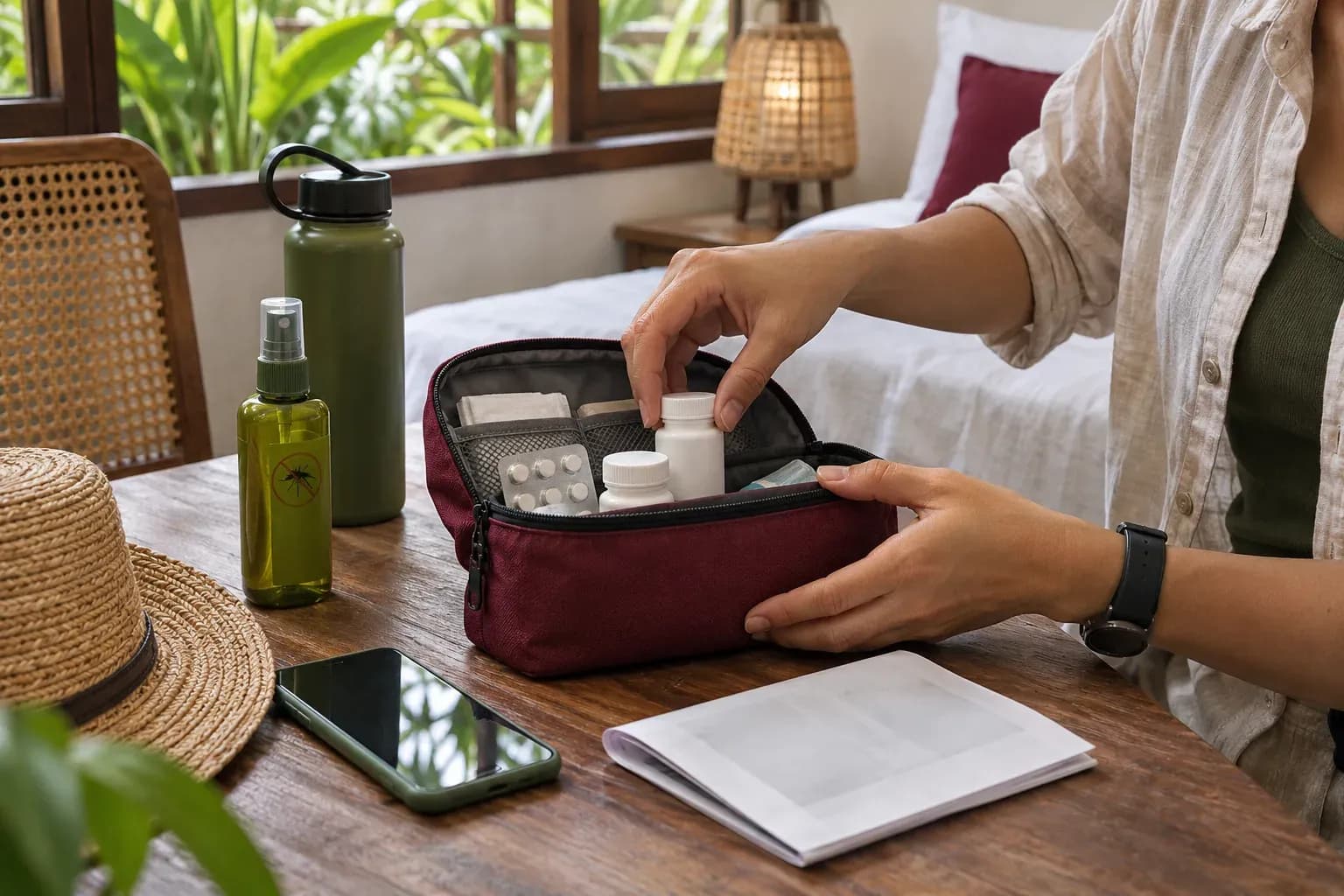
Match destinations, duration, health conditions and every planned activity.
Seek individualized travel-health advice early; WHO suggests four to eight weeks when possible.
Carry an adequate documented supply and check Vietnamese restrictions.
Urgent safety comes first; contact the insurer as soon as practical.
Quick answer
Choose insurance by the real itinerary, existing health conditions, activities and prepaid exposure—not the cheapest headline price. Confirm emergency medical treatment, evacuation, cancellation and activity exclusions; seek individualized travel-health advice early; carry documented medicine; and keep the assistance process, policy number and emergency plan available offline.
What must the policy match?
Compare the wording against the trip rather than using one headline limit.
| Trip element | Confirm | Common gap | Evidence to keep |
|---|---|---|---|
| Medical care | Treatment, evacuation and assistance process | Pay-first rules or low sublimits | Reports, invoices and authorization |
| Existing health | Required declarations and written acceptance | Pending tests or medication changes | Disclosure record and policy response |
| Activities | Motorbike, trekking, diving or remote travel | Licence, equipment or altitude exclusions | Wording and insurer confirmation |
| Bookings | Cancellation, interruption and delay | Uncovered reason or separate tickets | Terms, notices and receipts |
Only the insurer can confirm an individual policy. Keep material answers in writing.
In this guide
Start with the real trip, not the cheapest policy
Travel insurance only helps when the policy matches the route, traveller and activities. Write down every country used in transit, the complete trip length, the highest-value prepaid bookings and anything outside ordinary sightseeing. A short city trip, a motorbike journey and a remote trek create different questions even when the destination is the same.
Buy early enough for the cancellation section to matter, but do not treat purchase as the end of the task. Read the certificate and full wording, record the assistance number, and confirm uncertain activities with the insurer in writing. This guide explains a planning method; it does not recommend a provider or replace advice from a clinician, pharmacist or regulated insurance professional.
Set the route and likely spending first with the first-trip planning guide and Vietnam travel cost guide. The insurance limits should be compared with the trip you can actually lose or need to interrupt.
Compare the contract in six separate parts
A large headline limit does not explain the whole contract. Compare emergency medical treatment, evacuation or repatriation, cancellation before departure, curtailment after departure, baggage and personal money, and personal liability. For each section, record the limit, excess, exclusions, evidence required and assistance procedure.
Check whether emergency treatment can be paid directly or must be paid first and claimed later.
Confirm whether medical evacuation is included and who decides when it is medically necessary.
Compare cancellation reasons with the bookings that are genuinely non-refundable.
Read baggage limits per item as well as the total, especially for phones, cameras and laptops.
Check whether missed connections require one through-ticket or allow separately booked transport.
Save the claims deadline and the documents needed for delay, theft, illness or cancellation.
Do not assume a credit-card benefit, annual policy or employer plan covers the whole journey. Confirm the eligible traveller, payment conditions, maximum trip length and geographic area. Keep the insurer's written answer when the wording is unclear.
Declare health conditions and pending investigations accurately
Insurers can ask about existing physical or mental health conditions, medication changes, recent treatment and symptoms that are still being investigated. Answer the insurer's actual questions accurately and update them when circumstances change before departure. A policy bought without the required disclosure can fail when the claim is related to that condition.
Pregnancy, age, disability and ongoing treatment may change the suitable cover or the medical preparation, but they do not have one universal rule. Discuss personal risks with an appropriate health professional and ask the insurer to confirm the relevant cover in writing. Do not share medical records with an unverified seller or through an insecure message channel.
Treat motorbikes and adventure activities as separate decisions
A standard policy may exclude or restrict motorbikes, scooters, trekking, diving, climbing, caving, remote tours or other activities. Coverage can depend on engine size, licence, helmet, local law, experience, operator and whether the activity is recreational or competitive. A marketing phrase such as adventure cover is not enough.
For a motorbike, check both medical cover and third-party liability, then compare the policy with Vietnamese licensing requirements and the rental contract. If any requirement does not align, choose another form of transport. The safest planning assumption is that an activity is not covered until the wording or insurer confirms it.
Use the getting around Vietnam guide to choose a transport mode before asking the insurer about the exact activity.
Arrange health advice around the route and the traveller
WHO advises seeking travel-health advice early, preferably four to eight weeks before departure, while CDC publishes destination-specific vaccine and medicine guidance for Vietnam. The relevant advice depends on route, season, trip length, activities, age, pregnancy, medical history and previous vaccination. A national article cannot determine an individual's vaccine or medicine plan.
Take the itinerary to a travel clinic or qualified health professional rather than asking only for a generic Vietnam list. Mention rural or remote stays, altitude, animal contact, long road journeys and the type of accommodation. If departure is close, still seek advice: some preparation may remain useful even when the ideal lead time has passed.
Travel with medicine as a documented supply
Within Vietnam's current import limits, carry an adequate documented supply of prescribed medicine for the trip and a reasonable delay, in original labelled packaging where practical. This trip-plus-delay rule does not automatically apply to controlled medicine. Keep essential medicine in hand luggage and separate a backup only when storage, airline and import rules allow it. Bring the prescription and a clinician letter that identifies the traveller, medicine, dose and medical need.
Vietnam applies restrictions to some medicines, including categories described in current official advice as addictive or psychotropic. Rules can depend on classification and quantity, so do not increase a controlled-medicine supply for possible delay without confirming that it remains permitted. Ask the nearest Vietnamese diplomatic mission about uncertain medicine before travel; do not rely on a forum post or assume that a prescription from home automatically permits import.
Temperature-sensitive medicine needs its own storage and transport plan. Ask the airline, accommodation and clinician about the actual product rather than improvising with ice that may freeze or damage it. Keep copies of the documents accessible without exposing health information unnecessarily.
Pack a small health kit for the planned conditions
The useful kit is compact enough to remain with you. Include regular medicine, basic wound care, sun protection, insect-bite prevention, oral rehydration supplies and any clinician-recommended items for the route. Choose quantities and products with a pharmacist or health professional when allergies, children, pregnancy or medical conditions are involved.
Preparation also includes ordinary habits: safe drinking water, food hygiene, heat management, road safety and rest after long travel. Mosquito-borne disease, air quality and regional weather are not controlled by one packing list. Check current destination advice and adapt the day's plan when conditions change.
Know the care and insurance sequence before an emergency
Move to a safe place and seek urgent local help when delay would increase harm.
Call the insurer's assistance line as soon as practical and follow the policy's authorization process.
Use the facility recommended for the situation when there is a choice, without delaying emergency treatment.
Keep medical reports, prescriptions, invoices, payment records and transport receipts.
Tell a trusted contact what happened without placing passport or medical details in a public message.
Ask the insurer what evidence is needed before moving facility, changing travel or returning home.
Current FCDO advice lists 115 for an ambulance in Vietnam and advises contacting the insurer quickly when referred for treatment. Emergency lines may operate in Vietnamese. Save the accommodation address in Vietnamese and identify someone who can help communicate the location. Recheck emergency details shortly before the trip because operational information can change.
Protect mental health and recovery time
Jet lag, heat, unfamiliar traffic, disrupted sleep and constant decisions can aggravate an existing condition or make an ordinary trip feel unmanageable. Keep regular medicine and routines, schedule recovery after arrival, and avoid building every day around prepaid activities. Identify how to contact the treating professional and insurer from abroad when that is relevant.
If mental-health treatment or evacuation may be needed, confirm the policy wording rather than assuming it is treated like every other medical claim. Share a simple support plan with a trusted companion or contact, including warning signs and the preferred way to help. The plan should preserve dignity and privacy, not turn personal health information into travel paperwork carried everywhere.
Review the plan after any material change
Recheck cover when the route, trip length, health situation, activity or transport changes. Keep the latest certificate and assistance details offline and give a trusted person enough information to contact the insurer without sending full medical or passport records. Before departure, confirm that the policy is active, the premium is paid and the names match the travel documents.
Pair this setup with the Vietnam safety and scams guide so document backups, emergency contacts, payment recovery and insurance procedures support one another.
Insurance and health setup before departure
- 01Write down the full route, duration, activities and prepaid exposure.
- 02Declare relevant health conditions and pending investigations accurately.
- 03Confirm medical treatment, evacuation, cancellation and activity cover.
- 04Arrange individualized travel-health advice early.
- 05Check medicine classification, quantity, packaging and documents.
- 06Save the policy number and 24-hour assistance process offline.
- 07Keep health documents private but accessible when needed.
- 08Share an appropriate emergency contact plan with a trusted person.
Vietnam insurance and health questions
Sources and review dates
Time-sensitive claims are checked against the linked source and receive a new review date before they remain public.
- Vietnam travel advice: healthChecked
UK Foreign, Commonwealth & Development Office · Supports current Vietnam-specific health, insurance, medication and emergency-care guidance.
Review by - Vietnam travel advice: getting helpChecked
UK Foreign, Commonwealth & Development Office · Supports current emergency numbers, the Vietnamese-language caveat and seeking insurer assistance.
Review by - Foreign travel insuranceChecked
UK Foreign, Commonwealth & Development Office · Supports policy comparison, disclosure, activity exclusions, assistance and claims-document guidance.
Review by - Vietnam Traveler ViewChecked
US Centers for Disease Control and Prevention · Supports current destination-specific health preparation and clinician-review guidance for Vietnam.
Review by - Travel and healthChecked
World Health Organization · Supports early travel-health consultation, comprehensive insurance, medicine supply and post-travel care guidance.
Review by - Vietnam travel advice: safety and securityChecked
UK Foreign, Commonwealth & Development Office · Supports activity, motorbike, licensing and road-risk considerations that can affect cover.
Review by
Read next
Continue with the decisions that most often follow this guide.

Vietnam safety and scams: prepare, prevent and respond
A proportionate Vietnam safety plan for theft, transport, cards, nightlife, roads, weather, lost documents and emergency response.

What to book before Vietnam—and what to leave flexible
A practical booking timeline for entry documents, insurance, transport, accommodation, arrival setup and the decisions best left until Vietnam.
First trip to Vietnam: the decisions to make before you book
A complete first-time planning framework for entry requirements, weather, route length, money, connectivity, transport, packing and the first 24 hours.