
Vietnam airport arrival: immigration, bags and transfer
A step-by-step Vietnam airport arrival plan covering documents, immigration, baggage, customs, cash, connectivity, transfers and domestic connections.
9 minute read · Updated
How this guide is researched and reviewed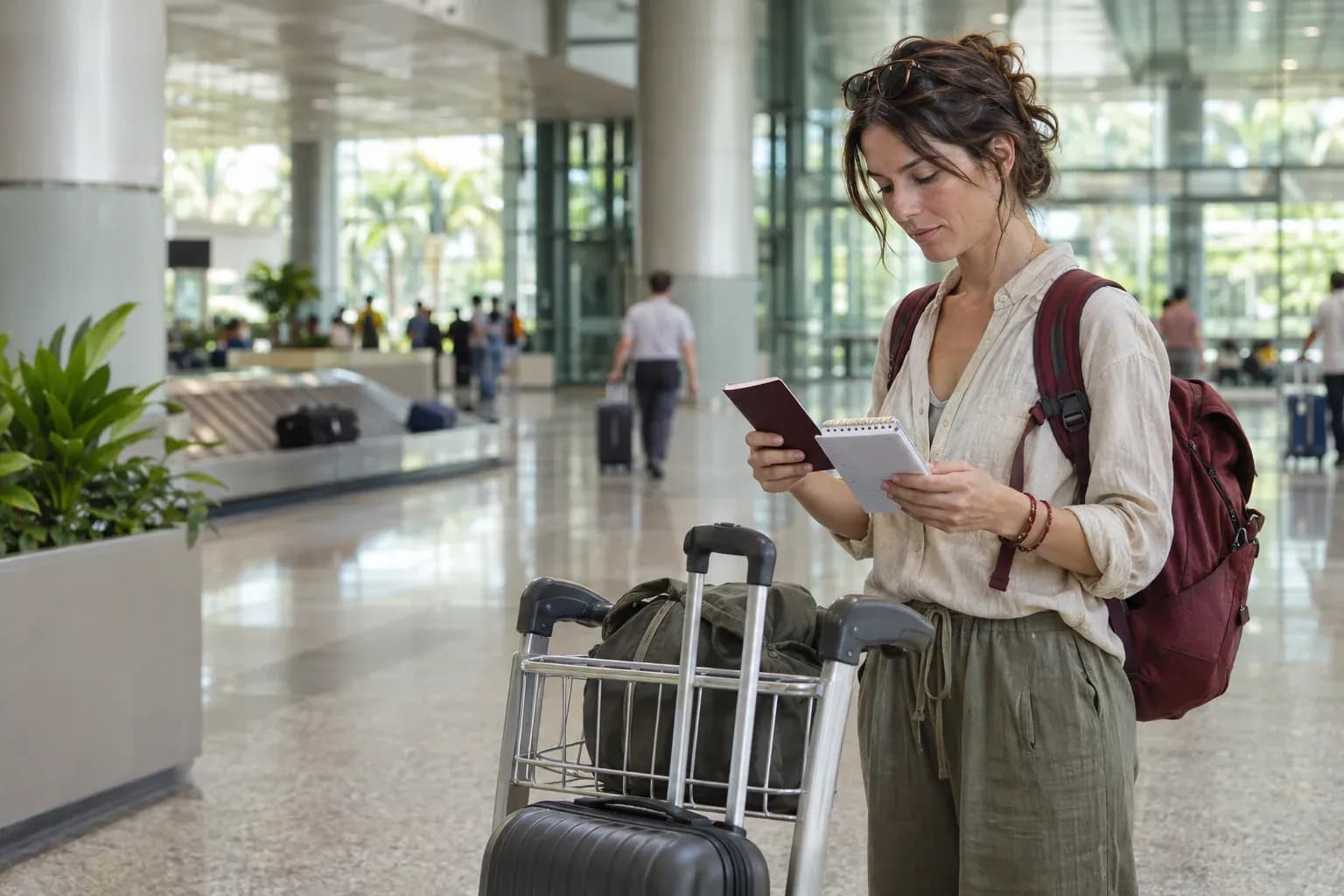
Immigration comes before baggage reclaim, customs and the public arrivals hall.
Open a report with the airline before leaving reclaim and keep the baggage tag.
Match the vehicle and driver to the official queue, app or written booking.
Allow for entry, bags, customs, terminal travel, check-in and security.
Quick answer
Keep the passport and entry permission offline, then follow the controlled sequence: immigration, baggage reclaim and customs before arranging cash, mobile data and transport in the public hall. Use only a verified taxi queue, app booking or confirmed driver, and leave a generous buffer for a separate domestic connection—especially when changing terminals or collecting checked bags.
Choose the first transfer before landing
The best option balances verification, luggage, arrival time and support—not only the lowest displayed fare.
| Option | Best when | Confirm | Main risk |
|---|---|---|---|
| Hotel pickup | Late arrival or first visit | Price, meeting point and driver identity | Accepting an unrelated name-board approach |
| App-booked car | Mobile data and a clear pickup zone | Plate, driver and in-app route | Moving the booking outside the app |
| Official taxi queue | No app or pre-booking | Queue, meter or posted rate | Following an unofficial solicitor |
| Airport bus | Daytime arrival and manageable luggage | Current route, stop and operating hours | Old timetable or wrong final stop |
Pickup zones and operating hours change. Recheck the airport or provider on the day of travel.
In this guide
Prepare the arrival before the aircraft door opens
A calm Vietnam arrival begins before landing. Keep the passport used for the visa or exemption, the issued e-visa when applicable, the first accommodation address and onward plan where they work offline. Do not depend on an inbox, cloud drive or nearly empty phone battery at the document checkpoint.
Check the airline and relevant Vietnamese authority again shortly before departure. Entry forms, terminal arrangements and document checks can change. If the airline asks to see onward travel or accommodation details, use the real bookings rather than inventing an answer that conflicts with the route.
If entry permission is still unclear, resolve it with the Vietnam eVisa guide before using this arrival sequence.
The goal is not to move through arrivals fastest. It is to keep every document, bag and payment decision under control while tired.
Follow the same five-stage arrival sequence
Follow Arrivals and immigration signs instead of following the crowd blindly.
Complete the document check with the passport and permission used for this journey.
Find the assigned baggage carousel on the flight-information display and inspect checked luggage before leaving.
Use the correct customs channel and declare controlled or above-limit goods when required.
Only after entering the public hall, arrange cash, connectivity and the transfer to the first accommodation.
Noi Bai International Airport publishes this order for international arrivals: immigration, baggage reclaim and customs before the public arrivals area. Other airports may look different, but the decision sequence is broadly useful. Keep baggage tags until the checked bag is in hand and the condition has been checked.
Treat immigration as a document check, not a conversation test
Queue in the lane indicated for your travel document and have the passport open to the identification page. Keep the e-visa printout or other permission accessible without exposing copies to everyone around you. Answer questions briefly and accurately. Dates, purpose, first address and intended departure should agree with the application and real itinerary.
Before walking away, confirm that the passport returned is yours and that any entry record is legible. If something appears wrong, ask an officer while still in the controlled area. Do not photograph desks, officers or other travellers' documents.
Resolve baggage problems before leaving the reclaim area
Check the carousel number against the flight, not only the city of origin. Compare the baggage tag when bags look similar. If a bag is missing or damaged, contact the operating airline's baggage desk before crossing into the public hall; the airport and airline may need the tag, boarding pass, bag description and delivery address to open a report.
Photograph damage and the baggage tag before the bag is moved or repaired.
Receive a written reference number and confirm how status updates will be delivered.
Keep medicine, documents, chargers and one change of clothes in carry-on baggage rather than relying on a checked bag.
Do not accept or carry a bag for a stranger through customs.
Use customs as the decision point for declarations
Customs rules apply to cash, goods and restricted items, not only commercial luggage. The official airport guidance tells travellers exceeding applicable duty-free limits to declare and pay duties where required. Rules and thresholds change, so check the General Department of Customs or ask at the declaration channel when uncertain.
Keep prescription medicine in original packaging with supporting documentation appropriate to the medicine and traveller. Do not assume a product that is legal at home can be imported without restriction. A declaration is safer than attempting to hide an item from inspection.
Set up money and connectivity in the public hall
Once the document and baggage stages are complete, obtain only the cash needed for the first transfer and meal. Use an airport ATM or exchange counter only after checking the displayed terms. Keep one card separate from the wallet used during the transfer.
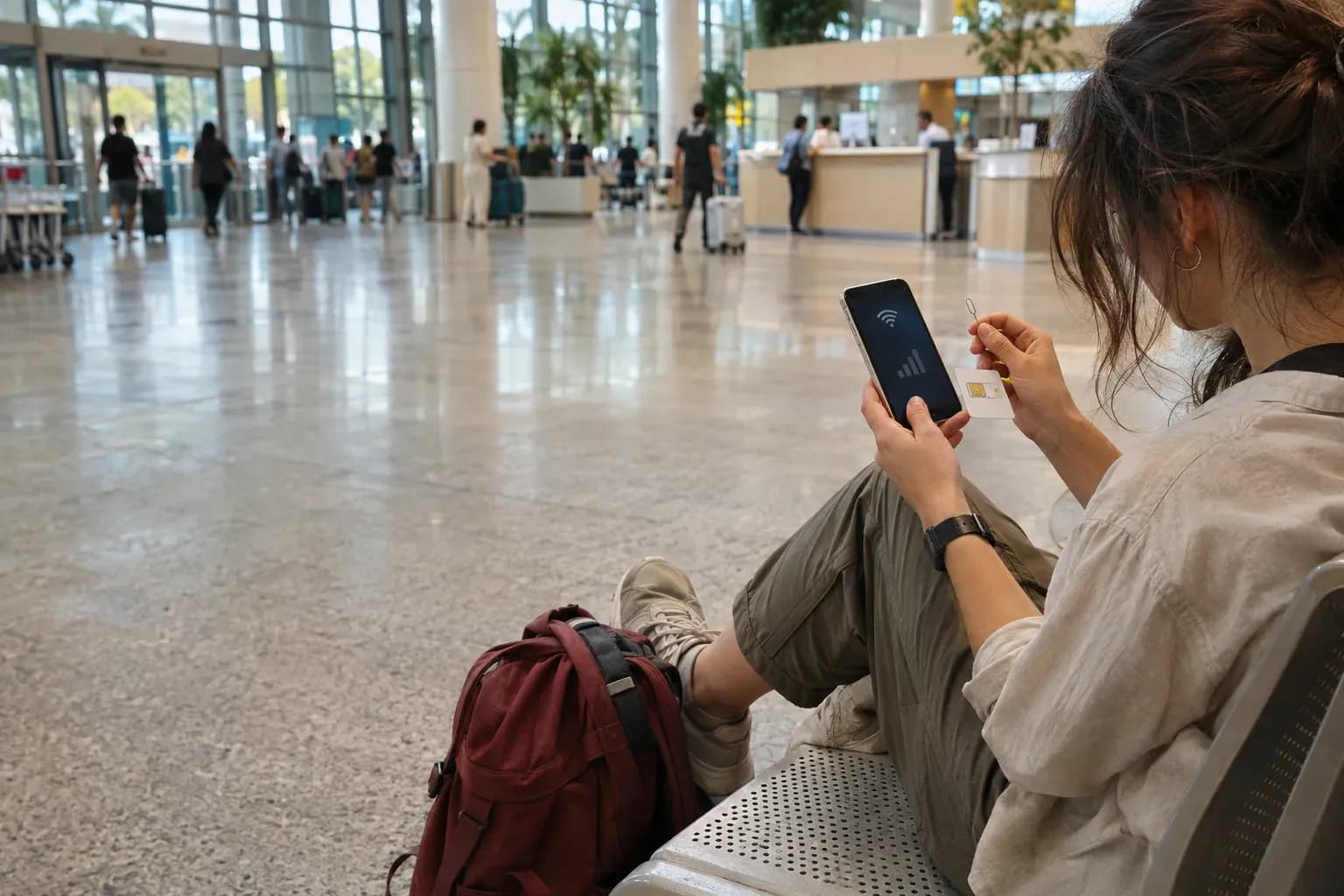
For mobile data, compare the exact plan and registration process in the Vietnam SIM and eSIM guide. Airport convenience is valuable when staff can confirm that data works before you leave, but it does not remove the need to understand validity, top-up and roaming settings.
Book the transfer without accepting an unverified approach
Use the official taxi queue, a clearly identified airport counter, a pre-arranged hotel driver or a ride booked entirely inside a recognized app. Ignore people who claim to be the app driver without matching the registration plate and driver details shown on the booking.
Confirm the accommodation's full address and district before entering the vehicle.
Match the vehicle registration and driver in the app or written booking.
Keep control of the phone and luggage while the pickup point is being negotiated.
Follow the app route and pay through the agreed channel; do not switch to an unexplained price mid-journey.
Send the trip or vehicle details to a companion when travelling alone.
Protect a same-day domestic connection
An international-to-domestic connection may require entry formalities, baggage collection, customs, a terminal transfer, a new check-in and security. At Noi Bai, the international terminal is T2 and the domestic terminal is T1; the airport publishes a free shuttle between them. Do not price a self-transfer as if it were an airside connection.
Leave enough time for a late inbound flight, immigration queues and bags. If tickets are separate, the second carrier may treat a missed flight as the traveller's responsibility. A first night near the arrival city is often more resilient than forcing an immediate connection after a long-haul journey.
Use the first 24 hours to stabilize the trip
At accommodation, confirm the next transfer, charge devices, save the address offline and separate the passport from daily cash. Withdraw or exchange a larger amount only after comparing options without arrival pressure. Avoid scheduling a fragile tour or non-refundable long transfer immediately after landing.
Complete the practical setup with the money and ATM guide and the Vietnam safety guide before the first full sightseeing day.
Before leaving the arrivals hall
- 01Confirm the returned passport and entry record before leaving immigration.
- 02Collect every checked bag and retain baggage tags.
- 03Complete any required customs declaration honestly.
- 04Obtain only the cash needed for the transfer and first meal.
- 05Test mobile data before leaving staffed support.
- 06Match the driver and vehicle to the verified booking.
- 07Keep the accommodation address available offline.
- 08Protect sufficient time for a terminal change or separate connection.
Vietnam airport arrival questions
Sources and review dates
Time-sensitive claims are checked against the linked source and receive a new review date before they remain public.
- International flight arrival procedureChecked
Noi Bai International Airport · Supports the official international-arrival sequence, baggage process and customs stage at Noi Bai.
Review by - Transfer flight procedureChecked
Noi Bai International Airport · Supports the international-to-domestic transfer sequence and terminal shuttle at Noi Bai.
Review by - A traveller's guide to Vietnam's airportsChecked
Vietnam Tourism · Supports broad airport, terminal and onward-transport planning context for international visitors.
Review by
Read next
Continue with the decisions that most often follow this guide.

Vietnam eVisa: apply safely and avoid common mistakes
A step-by-step guide to the official Vietnam eVisa process, including eligibility checks, entry dates, port choices, document preparation and arrival backups.
Vietnam SIM vs eSIM: choose and set up mobile data
Compare local SIMs, operator eSIMs, global travel eSIMs and roaming, then configure the phone safely for data, calls and two-factor authentication.

What to book before Vietnam—and what to leave flexible
A practical booking timeline for entry documents, insurance, transport, accommodation, arrival setup and the decisions best left until Vietnam.