
Best time to visit Vietnam: choose by region and route
A region-by-region weather guide for matching northern, central and southern Vietnam to your dates, activities and tolerance for heat or rain.
11 minute read · Updated
How this guide is researched and reviewed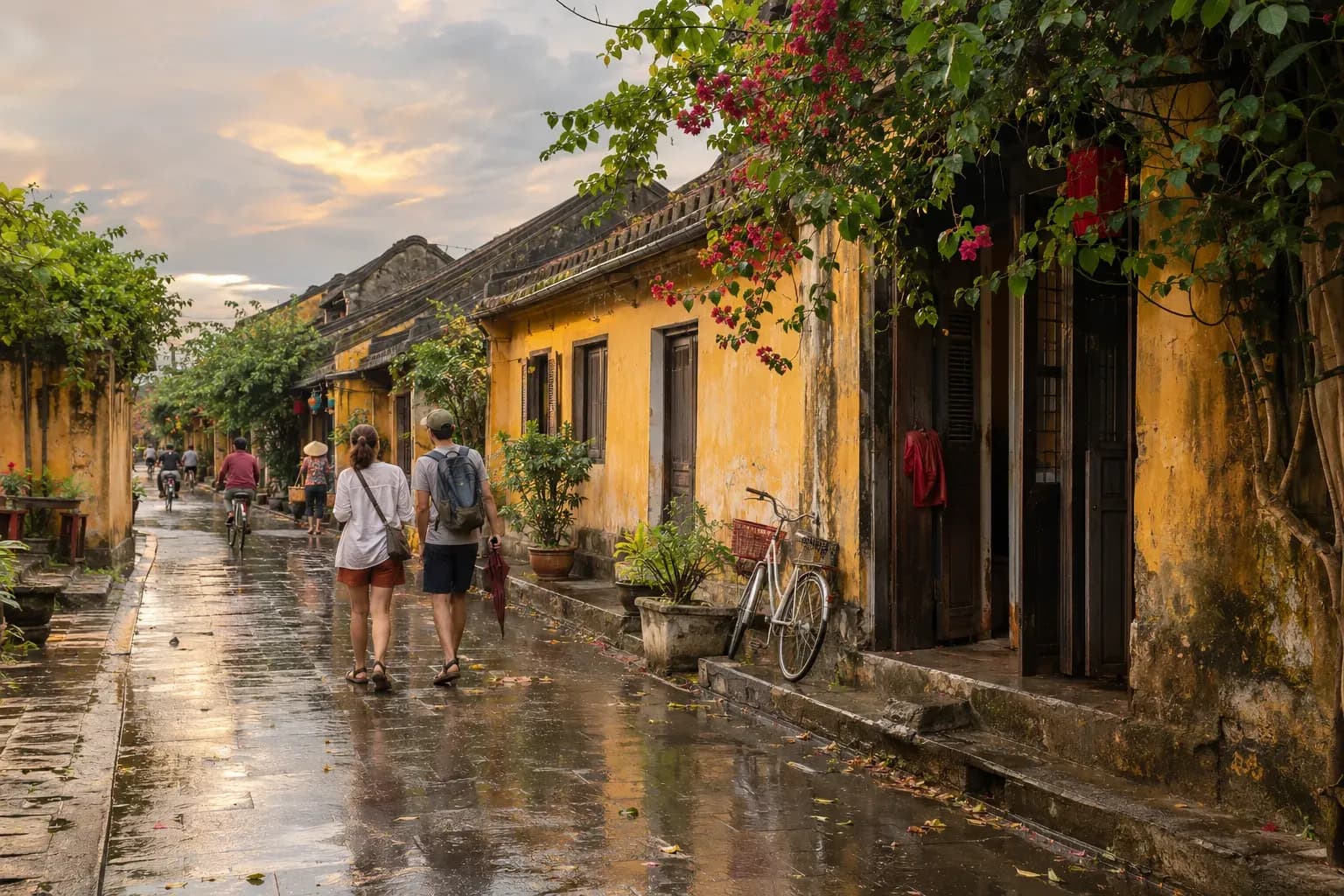
March to May often overlaps useful conditions across several regions, without guaranteeing perfect weather.
Winters can be cool and misty; summers are generally hot, humid and rainy.
Huế and Hội An face a later wet period and greater storm or flood risk around September–November.
The south stays warm; December–April is generally drier and May–November wetter.
Quick answer
March to May is often the broadest countrywide compromise, but Vietnam has no single perfect month. Northern Vietnam, the central coast and southern Vietnam follow different seasonal patterns. Choose dates around the region and activity that matter most, allow flexible bookings where storms or flooding are more likely, and use current forecasts and official warnings for day-to-day decisions.
Regional weather planning windows
Use these broad patterns to choose dates, then check current local conditions. Mountain, island and marine weather can differ.
| Region | Broadly drier or clearer | Broadly wetter or harder | Planning implication |
|---|---|---|---|
| North: Hà Nội, Ninh Bình, Hạ Long | Parts of spring and autumn | Hot, rainy summer; cool or misty winter | Carry layers in winter and protect outdoor plans in summer |
| Central: Huế, Đà Nẵng, Hội An | Often February or March through August | Later rains, storms and possible floods from roughly September | Use flexible bookings in the late rainy season |
| South: Ho Chi Minh City, Mekong | Generally December–April | Generally May–November, often with afternoon rain | Plan around heat even during the drier season |
| Phú Quốc | Generally October–June | Stormier around July–September | Check sea conditions before ferry and beach days |
Seasonal patterns are not forecasts. Tropical systems, elevation and year-to-year variation can change actual conditions.
In this guide
There is no single best month for all of Vietnam
Vietnam extends across several climate zones. A month that gives Hà Nội clear, cool walking weather can bring heavy rain to Hội An, while Ho Chi Minh City remains hot. The useful question is therefore not “What is Vietnam's best season?” but “Which regions and activities must work on this route?”
March to May can offer a broad countrywide compromise, but even that is not a guarantee. Elevation, tropical systems, monsoon timing and local conditions create meaningful variation. Choose dates by matching the route to acceptable conditions, then build enough flexibility for a forecast that disagrees with the average.
Weather averages choose a planning window. A current forecast chooses tomorrow's activity.
Read Vietnam as three broad weather regions
Northern Vietnam
Hà Nội, Ninh Bình and Hạ Long generally have cooler or cold, misty conditions from December to March; warmer and clearer periods through parts of spring; hot, humid and rainy conditions in summer; and a cooler, often clearer autumn. Mountain destinations such as Sa Pa and Hà Giang can be substantially colder than the lowlands.
For urban walking and northern landscapes, spring and autumn are common starting points. Winter can be atmospheric but requires layers, while summer calls for heat management and plans that tolerate downpours. Boat and mountain activities need a current safety check, not only a seasonal label.
Central Vietnam
Central Vietnam does not simply copy the north or south. Vietnam Tourism describes Huế as generally warmer and clearer from March to August, with a wetter, cooler period from September into February. Hội An commonly has warmer, clearer conditions from February to August and a wetter period from September into January.
Late-season storms and flooding can affect Huế, Đà Nẵng and Hội An, especially around September to November. That does not make every day unusable, but it increases the chance of transport changes, closed attractions and waterlogged streets. A central-coast route in this period needs flexible rooms and an alternative indoor day.
Southern Vietnam
Ho Chi Minh City and the Mekong Delta remain warm through the year. December to April is generally the clearer, drier period; May to November brings the wetter season, often with intense afternoon rain rather than continuous rain all day. Humidity and heat still matter in the dry season.
Phú Quốc has its own exposure to sea conditions. The official tourism guidance identifies July to September as a stormier period and October to June as generally clearer. Ferry and beach plans should follow current marine and operator advice.
Choose dates by route, not by a national average
List the non-negotiable regions and the activity that would be most affected by weather.
Mark each region's broadly drier, wetter, hotter and cooler periods.
Find the overlap that is acceptable—not necessarily perfect—for the whole route.
Check whether Tết or another major holiday changes transport and opening patterns.
Price flexible bookings where the route has the greatest weather exposure.
Review current forecasts and official warnings shortly before each transfer.
A two-week north-to-south trip usually requires compromise. Protect the experience that matters most: mountain visibility, central-coast history, beach time or city food exploration. Let the less weather-sensitive parts of the route absorb imperfect days.
For a concrete multi-region structure, compare these weather trade-offs against the balanced Vietnam 14-day itinerary rather than adding more stops to chase sunshine.
A practical month-by-month planning map
December to February
The south is commonly drier and sunny, while the north can be cool, damp and misty. Central destinations move from their wetter period toward better conditions at different speeds. This window suits travellers who prioritize the south and accept layers and reduced visibility in parts of the north.
March to May
This is one of the broadest compromise windows: the north warms, much of central Vietnam is in a clearer period, and the south transitions toward wetter months. Heat can rise sharply by late spring. Secure shade, water and slower afternoons rather than treating pleasant seasonal charts as a promise of mild temperatures.
June to August
Expect heat and humidity in many cities, summer rain in the north and south, and often useful beach conditions along parts of the central coast. This can work well for families tied to school holidays, provided the itinerary avoids midday overexertion and protects transport time from storms.
September to November
Northern autumn can offer cooler, clearer conditions, while the central coast faces a greater storm and flood risk. The south remains in its wetter season before conditions generally improve toward year-end. This is a strong example of why a single national “best time” answer fails.
Match the calendar to the activity
City food and museums: resilient in most months when the day can shift around heat or rain.
Mountain trekking: sensitive to visibility, trail condition, cold and storm warnings; use local operator guidance.
Boat and cruise routes: sensitive to wind, tropical systems and official operating decisions.
Central heritage towns: possible year-round, but flooding can materially change access and comfort.
Beach stays: depend on the specific coast or island, not a countrywide dry-season label.
Motorbike routes: require conservative decisions around rain, visibility, heat and road conditions.
Do not keep an unsafe outdoor booking merely because the trip was planned around it. Operators and authorities can see local conditions that a broad climate guide cannot.
Plan for heat as carefully as rain
Travellers often focus on monsoon rain and underestimate heat. High humidity can turn a modest walking plan into a tiring day, especially after a long flight. Start outdoor sightseeing earlier, reserve the hottest hours for lunch or indoor visits, carry water and use sun protection.
A route becomes more resilient when accommodation is close to the evening area, each base has an indoor option, and transfer days do not depend on completing a long outdoor attraction first. Weather planning is also pace planning.
Book the weather-sensitive parts differently
Prefer changeable accommodation around exposed coasts or mountain routes when the forecast horizon is still distant.
Avoid connecting a weather-sensitive boat trip directly to an international flight.
Keep one lower-stakes activity in every base that can move to a wet or very hot day.
Confirm cancellation and operator-safety policies before paying, not after a warning appears.
Allow extra transfer time in periods with greater storm or flood risk.
The goal is not to eliminate weather risk. It is to prevent one disrupted activity from breaking the rest of the journey.
Pack for the route's contrasts
A cross-country trip can require light rain protection, sun protection and a warm layer in the same suitcase. Pack layers that dry quickly rather than a separate heavy wardrobe for every climate.
Breathable clothing and a reliable sun hat for heat.
A compact rain shell or umbrella that is accessible during transfers.
A warm layer for northern winter, highland mornings and strong air conditioning.
Footwear with useful grip that can recover from wet streets.
Dry storage for passport, phone and medication.
Any essential medication plus the advice appropriate to your health and home country.
Use forecasts at the right time
Seasonal guidance is most useful while choosing dates. A seven- to ten-day forecast becomes useful for packing and broad activity order. Short-range local forecasts, official warnings and operator decisions matter for the day itself.
Recheck before a mountain transfer, cruise, ferry or exposed road journey. If local authorities or the operator suspend an activity, treat that as a safety decision—not a customer-service inconvenience.
Choose travel dates in this order
- 01List the regions and weather-sensitive activities that matter most.
- 02Compare northern, central and southern patterns separately.
- 03Choose an acceptable overlap instead of waiting for a perfect national month.
- 04Check Tết and other holiday effects on transport and opening schedules.
- 05Use flexible bookings around exposed coasts, mountains and storm periods.
- 06Build one indoor or lower-risk alternative into every base.
- 07Pack for regional contrast, heat and rain rather than one forecast icon.
- 08Recheck official warnings and local forecasts before each sensitive transfer.
Vietnam weather planning questions
Sources and review dates
Time-sensitive claims are checked against the linked source and receive a new review date before they remain public.
- Weather and climate in VietnamChecked
Vietnam Tourism · Supports the regional and destination-level seasonal patterns for northern, central and southern Vietnam and Phú Quốc.
Review by - Frequently Asked QuestionsChecked
Vietnam Tourism · Supports central-Vietnam storm and flood cautions, northern winter conditions and Tết disruption guidance.
Review by
Read next
Continue with the decisions that most often follow this guide.

Getting around Vietnam: flight, train, bus or car
Compare domestic flights, trains, buses, vans, private cars and ferries, then protect the route with realistic booking order and transfer buffers.

What to book before Vietnam—and what to leave flexible
A practical booking timeline for entry documents, insurance, transport, accommodation, arrival setup and the decisions best left until Vietnam.

Vietnam travel insurance and health preparation
Choose travel insurance, prepare medicine and health documents, check activity exclusions and know how to obtain help during a Vietnam trip.